

Market Update February 2026
Blue Ridge Vacation Rental Market: 2025 In Review & Early 2026 Trends
As the leading and most experienced vacation rental management company in Blue Ridge, Escape to Blue Ridge brings unmatched expertise to the table. That's why we’re excited to share our latest Market Update, packed with data & trends on supply, demand, pricing, and competition in the overall Blue Ridge short-term rental market. As the market settles into a more sustainable “back to normal” environment, we believe your investment’s future is bright, and we are well‑positioned to use our experience and expertise to your advantage.
Our deep market knowledge, backed by Key Data insights, helps us stay ahead of the curve—optimizing pricing, boosting bookings, and ensuring your investment shines. With our proven track record and dedicated team, we’re not just managing your property; we’re maximizing its success in this thriving market.
Thank you for choosing Escape to Blue Ridge, built by the best for the best!
How Our Seasons Shape Your Earnings
In the North Georgia Mountains, guest booking demand follows a clear seasonal pattern, with strong peaks in January and February (planning ahead for Spring Break and Summer and again in August and September as they plan for our peak Harvest & Holiday season. By understanding when guests naturally book, we can lean into high‑demand periods with confident pricing while using targeted promotions and strategies to keep revenue flowing in the slower months. At Escape to Blue Ridge, we don’t just fill nights; we use data‑driven pricing and stay rules to make each booking more profitable for our owners.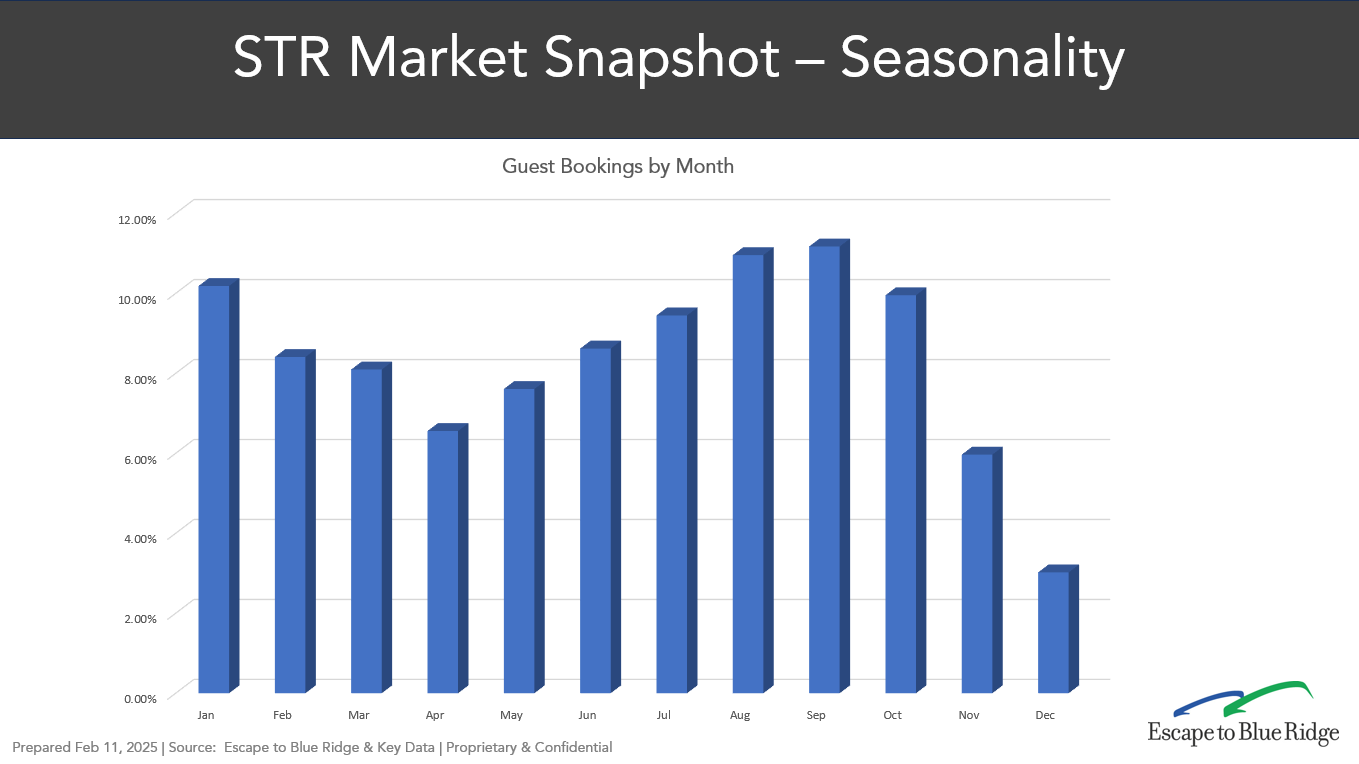
Occupancy follows a similar arc, climbing in peak seasons and easing in the shoulder months, which is normal and healthy for a mountain vacation market. The goal is not 100% occupancy year‑round, but the right mix of strong peak performance and smart fill‑in on slower dates so your home earns well across the full year.

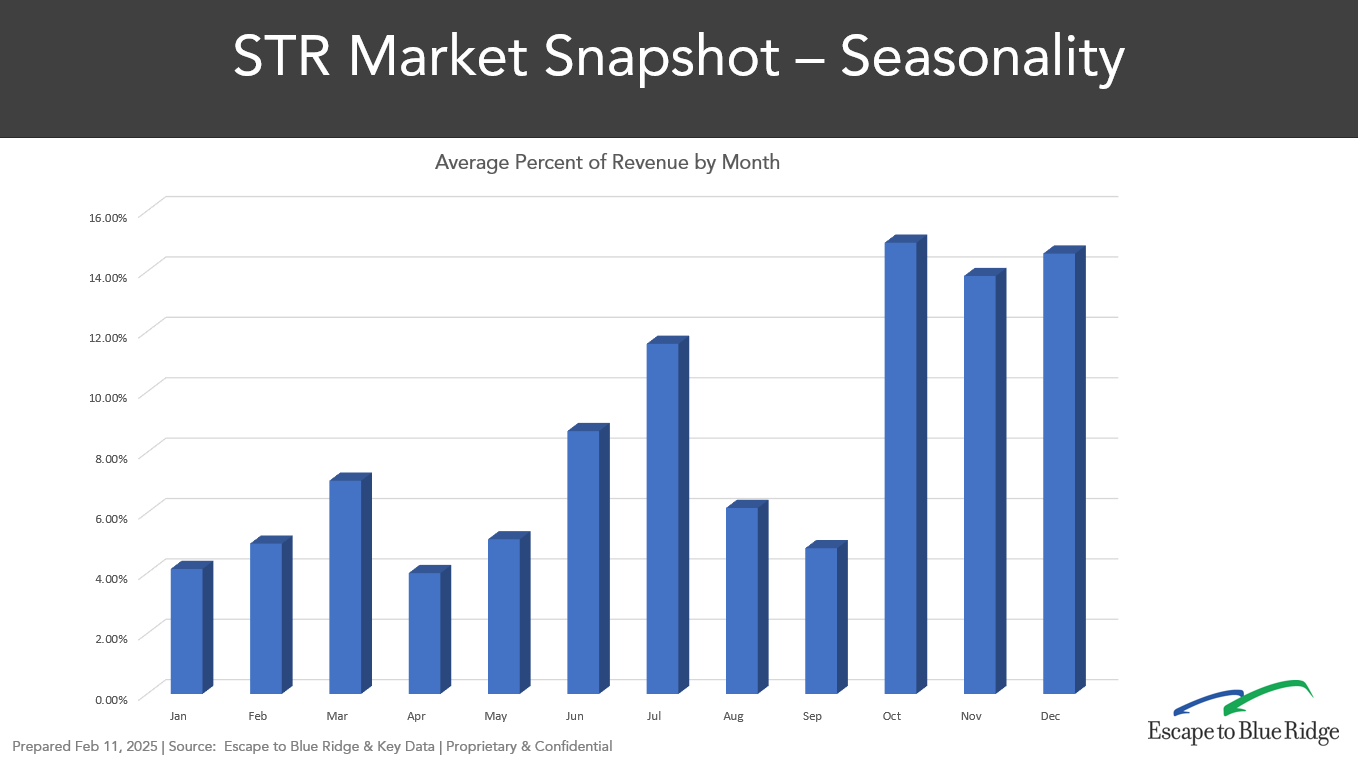
A glance at revenue by month translates the seasonality story into dollars, highlighting that a large share of your annual revenue is earned in a handful of peak months. Protecting those peak periods with optimized pricing and minimum stays, while strategically filling in shoulder dates, is one of the most important levers for maximizing your yearly take‑home.
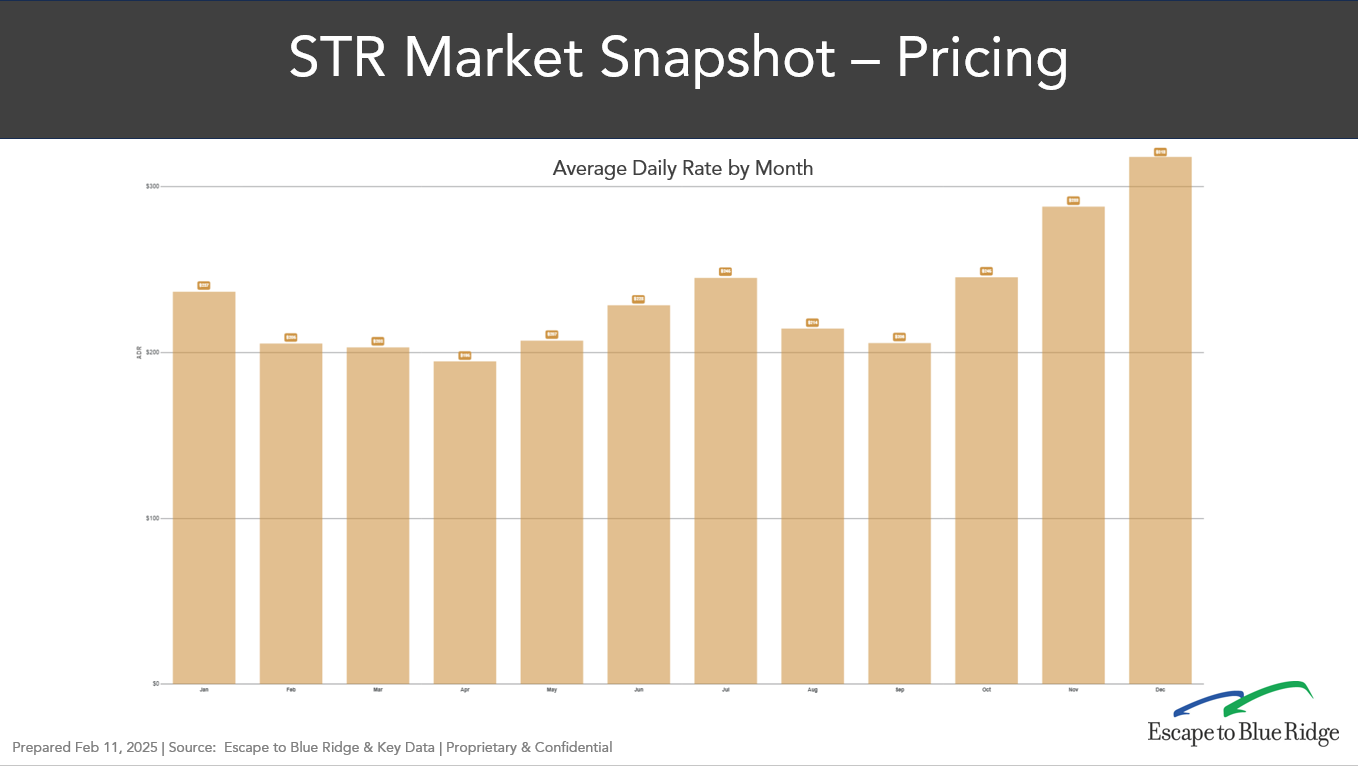
Here you can see that nightly rates rise in step with high-demand months and ease back when demand softens, which reflects intentional, market-based pricing rather than discounting for its own sake. This approach helps your home capture top-of-market rates when guests are willing to pay more, without leaving nights empty when travelers are more price-sensitive.
Stays are very slightly shorter in several months compared to last year, which tracks with broader traveler behavior: more long weekends, more remote-work 'mini-escapes,' and more last-minute trips. Shorter, well-priced stays often mean more total bookings, more cleaning/management touchpoints, and better calendar flexibility, which can add up to strong annual revenue even as individual stays contract a bit.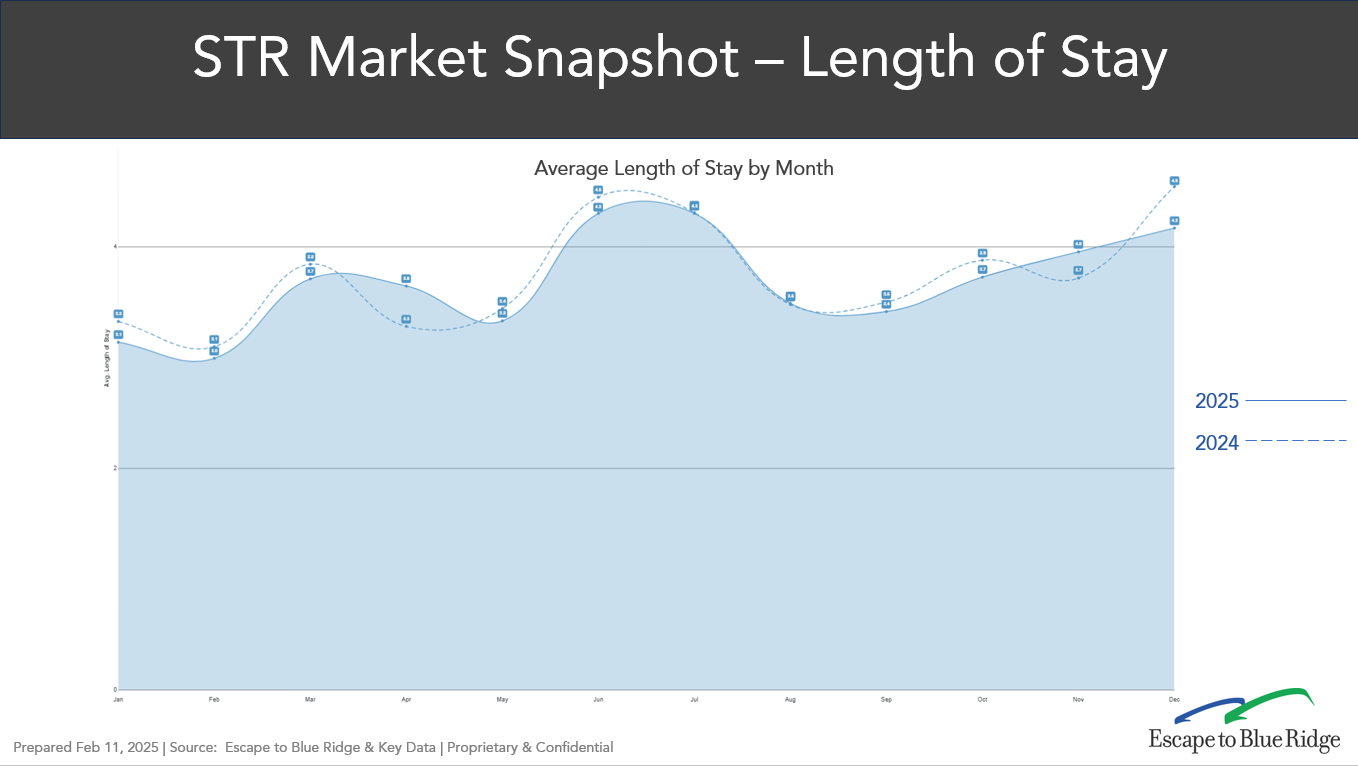
This chart shows that guests staying with EBR generate higher total stay value than the broader market, even as trips get a bit shorter. That lift comes from better-qualified guests, strong pre-stay vetting, and smarter revenue management, so your calendar is filled with the right reservations rather than just more reservations.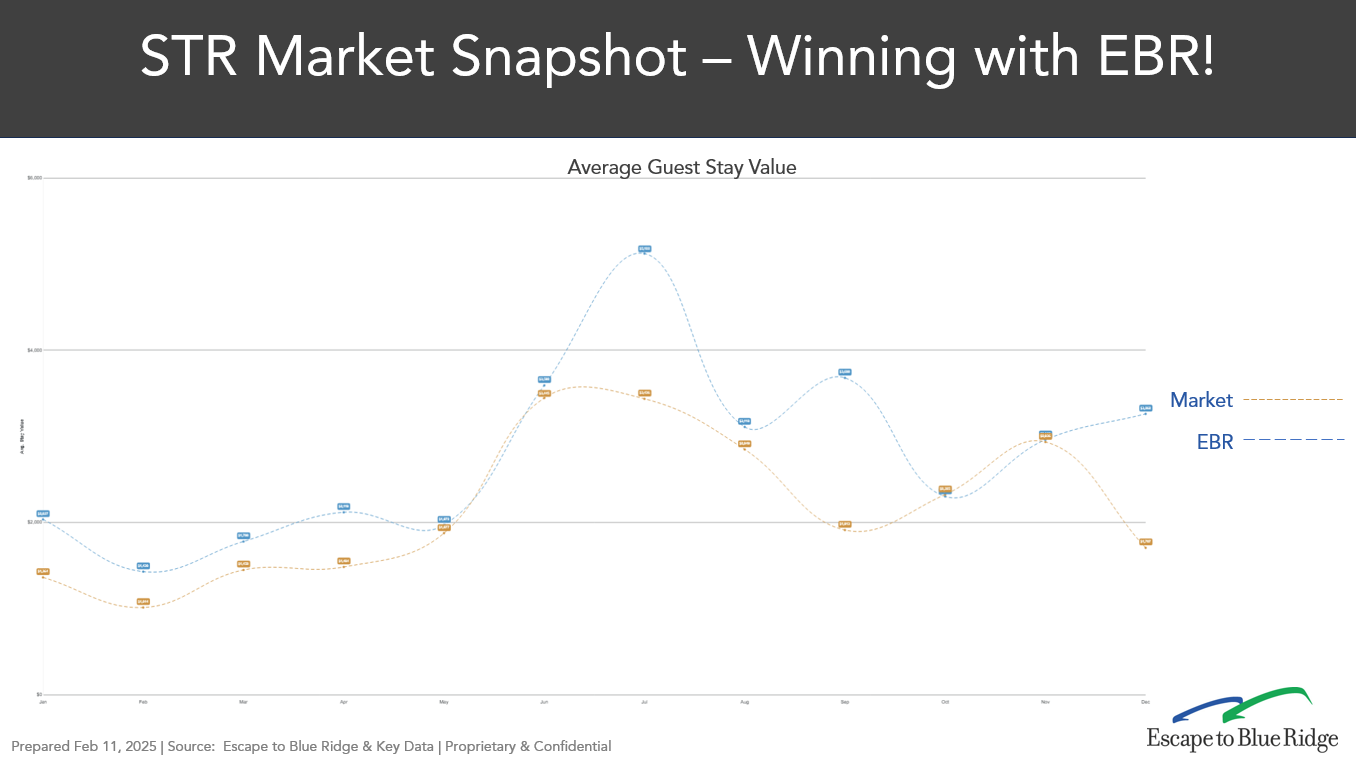
What This Means for You
- Seasonality: Your home's earnings are naturally concentrated in peak seasons, so protecting high-demand dates with smart pricing and minimum stays is critical to your annual revenue.
- Length of Stay: Slightly shorter trips are not a negative trend; they let us fill more gaps on the calendar and can lead to more total bookings - and higher total revenue - across the year.
- Pricing Strategy: Dynamic, data-driven pricing lets us raise rates when demand is strong and stay competitive in softer periods, helping you earn more over a full 12-month cycle.
- Total Stay Value: This is where we really win! By attracting better-qualified guests who spend more per night, each reservation does more "heaving lifting" for your bottom line.